Air fryer salmon bites with rice and a crisp cucumber-edamame salad: 35 g protein, about 550 calories, plus an oven method and easy yogurt sauce.
High-Protein Weeknight Dinner
Air Fryer Salmon Bites with Rice & Cucumber Salad (35 g Protein, 550 Calories)
These air fryer salmon bites turn a single pound of salmon into a bowl dinner that is crisp at the edges, tender at the center, and measured with real care: roughly 550 calories and 35 grams of protein per serving, with fluffy jasmine rice, a bright cucumber–edamame salad, and a cool garlic yogurt sauce. The method takes about 25 minutes from fridge to table, and it works just as well in a standard oven if you do not own an air fryer.
What distinguishes this recipe from the countless salmon bowls online is precision. Every component has a defined portion, the macronutrients are calculated from USDA reference values, and the cooking times are anchored to the federal safe internal temperature for fish rather than guesswork. The result is a plate you can cook on a Tuesday, pack for Wednesday’s lunch, and log in a nutrition app without second-guessing the numbers.
The Nutrition Blueprint: Why This Salmon Bowl Works
A balanced dinner bowl rests on a simple architecture: a lean, high-quality protein, a measured portion of starch for energy, a generous volume of vegetables for fiber and crunch, and a sauce that adds flavor without quietly doubling the calories. This recipe applies that architecture deliberately, which is why it lands at about 550 calories with roughly a quarter of those calories coming from protein.
Salmon does most of the heavy lifting. A 3.5-ounce cooked-weight portion of Atlantic salmon supplies around 20 grams of complete protein along with omega-3 fatty acids, vitamin D, and B12. Shelled edamame, the second protein source, contributes about 6 grams of plant protein per third-cup and adds fiber that salmon lacks. Greek yogurt in the sauce and a modest serving of rice close the remaining gap to 35 grams.
| Nutrient | Amount | % of calories |
|---|---|---|
| Calories | ~550 kcal | 100% |
| ● Protein | 35 g | 25% |
| ● Carbohydrates | 52 g (5 g fiber) | 38% |
| ● Fat | 23 g (about 2.5 g omega-3) | 37% |
The fat figure deserves a word of context. At 37 percent of calories it may look high on paper, but most of it comes from salmon itself, and the bulk of that is unsaturated. The Dietary Guidelines for Americans encourage about 8 ounces of seafood per week precisely because of that fatty-acid profile, and two servings of this bowl nearly meet the weekly target on their own. If you want the full macro-tracking framework behind meals like this, our high-protein meal planner guide walks through how to set daily targets.
Ingredients for Salmon Rice Bowls (Serves 4)
The list below is organized by component so you can prepare each element in parallel. Quantities are written for four servings; halve them for two, or keep the full batch and use the leftovers for lunch.
Salmon Bites
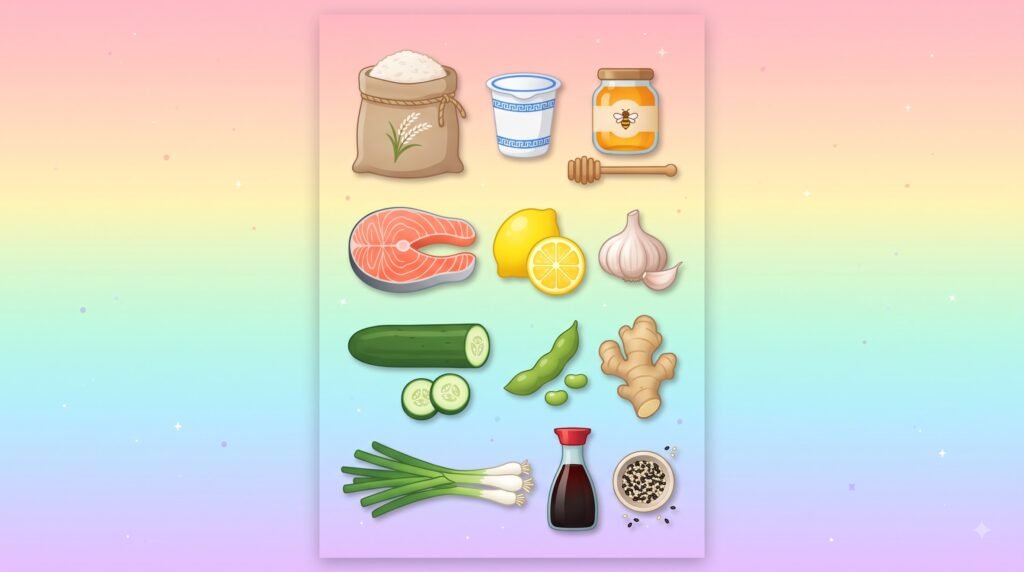
- 1 lb (450 g) skin-on salmon fillet, yielding about 14 oz skinless
- 2 tbsp low-sodium soy sauce or tamari
- 2 tsp honey
- 2 garlic cloves, finely grated
- 1 tsp freshly grated ginger
- 1 tsp sriracha (optional)
- 2 tsp cornstarch
- Avocado oil spray
Cucumber–Edamame Salad
- 1 large English cucumber, thinly sliced (about 4 cups)
- 1⅓ cups frozen shelled edamame, thawed
- 2 tbsp unseasoned rice vinegar
- 2 tsp toasted sesame oil
- ½ tsp sugar or honey
- 2 scallions, thinly sliced
- 4 tsp toasted sesame seeds
- Pinch of salt and red pepper flakes
Rice & Yogurt Sauce
- ¾ cup dry jasmine rice (about 2⅔ cups cooked)
- ¾ cup plain 2% Greek yogurt
- 1 tbsp fresh lemon juice plus ½ tsp zest
- 1 small garlic clove, grated
- 2 tbsp chopped dill or cilantro
- 1 tsp low-sodium soy sauce or a pinch of salt
- Water to thin, as needed
Equipment
You will need an air fryer of at least 4 quarts (or a rimmed baking sheet for the oven method), a sharp knife, a medium bowl for marinating, a small saucepan or rice cooker, and an instant-read thermometer. That last tool is the single most effective upgrade for cooking fish confidently; it removes the anxiety of cutting into a piece to check doneness and is inexpensive at most American grocery and hardware stores.
Shopping tip: Center-cut fillets are thicker and more uniform, which produces evenly sized bites that finish cooking at the same moment. Tail pieces are thinner and tend to overcook. Keep a running list with our printable grocery list template.
How to Make Air Fryer Salmon Bites, Step by Step
The air fryer is ideal for small pieces of fish because its rapid, circulating heat browns the exterior before the interior has time to dry out. The light cornstarch coating is the quiet secret here: it absorbs surface moisture and caramelizes with the honey, creating edges that genuinely crisp rather than steam.
- Start the rice first. Rinse ¾ cup jasmine rice until the water runs mostly clear, then cook with 1 cup plus 2 tablespoons water on the stovetop (simmer covered 15 minutes, rest 10) or in a rice cooker. Rinsing removes surface starch and gives you separate, fluffy grains.
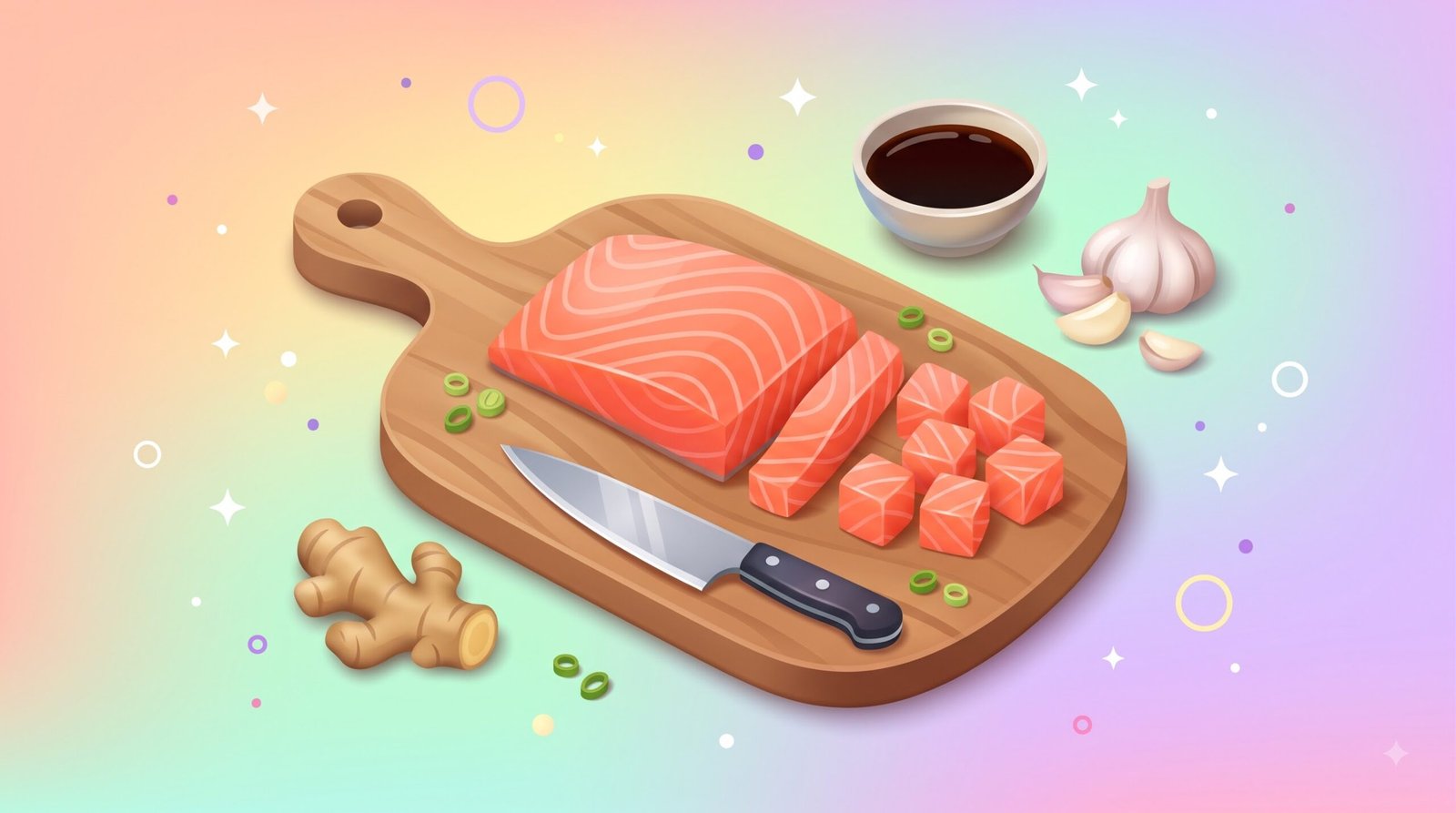
- Remove the skin and cube the salmon. Lay the fillet skin-side down, slide a sharp knife between flesh and skin at one corner, and work along the length while gripping the skin. Cut the fish into 1-inch cubes; uniform size matters more than perfect shape.
- Pat dry, then marinate briefly. Blot the cubes with paper towels. Whisk soy sauce, honey, garlic, ginger, and sriracha in a bowl, add the salmon, and toss. Let it sit 10 minutes while the air fryer heats; longer than 30 minutes and the salt begins to firm the texture.
- Coat with cornstarch. Sprinkle the cornstarch over the salmon and toss gently until no dry patches remain. The marinade and starch form a thin glaze that clings during cooking.
- Preheat to 400°F. Run the empty air fryer for 3 to 5 minutes. Lightly spray the basket with avocado oil.
- Arrange in a single layer. Leave a little space between pieces so air reaches every side. Cook in two batches if your basket is small; crowding is the most common cause of pale, soft bites. Mist the tops lightly with oil.
- Air fry 7 to 9 minutes, shaking at minute 4. The bites are done when the edges are browned and an instant-read thermometer reads 145°F in the thickest piece.
- Rest for 2 minutes. Carryover heat finishes the center gently while the glaze sets. Meanwhile, assemble the salad and stir together the sauce.
Americans frequently search how long to cook salmon bites in the air fryer, and the honest answer is that it depends on cube size and machine wattage. One-inch pieces typically need 7 to 9 minutes at 400°F; ¾-inch pieces may be ready at 6. The FoodSafety.gov safe minimum temperature chart lists 145°F for fish, or cook until the flesh is opaque and separates easily with a fork.
Cooking frozen salmon: Thaw overnight in the refrigerator or in a sealed bag submerged in cold water for about an hour. Cubing fully frozen fillets is unsafe with a knife and produces uneven pieces.
Oven Method: Salmon Bites Without an Air Fryer
Not every kitchen has an air fryer, and the oven delivers results that are nearly indistinguishable if you respect two principles: high heat and generous spacing. A convection setting, if your oven has one, brings you even closer to air-fryer texture because it uses the same moving-air principle.
- Heat the oven to 425°F with a rack in the upper-middle position. If using convection, reduce to 400°F.
- Line a rimmed baking sheet with parchment and spray lightly with oil. For extra crispness, set an oven-safe wire rack on the sheet so air reaches the undersides.
- Prepare the salmon exactly as above: cube, marinate, and coat with cornstarch.
- Spread the bites at least 1 inch apart. Mist the tops with oil.
- Roast 9 to 12 minutes, flipping once at the halfway point, until the internal temperature reaches 145°F.
- Optional broil finish: Switch to high broil for 60 to 90 seconds, watching closely, to deepen the caramelization on the honey glaze.
The oven method has one clear advantage: capacity. A half-sheet pan holds a full pound of bites in a single layer, so you can cook the entire recipe in one round. That makes it the better choice for Sunday meal prep, when you might double the batch. Readers who batch-cook regularly will find our sheet-pan meal prep ideas a useful companion.
The Easy Garlic–Lemon Yogurt Sauce for Salmon
Most restaurant-style salmon bowls lean on spicy mayonnaise, which can add 150 calories or more in two tablespoons. This yogurt sauce delivers a comparable creamy, tangy contrast for about 35 calories per serving while contributing roughly 4 grams of protein. It is, in practical terms, the most efficient ingredient in the bowl.
To make it, stir ¾ cup plain 2% Greek yogurt with the lemon juice and zest, grated garlic, chopped herbs, and soy sauce or salt. Thin with 1 to 2 tablespoons of cold water until it drizzles from a spoon. Let it rest for five minutes so the garlic mellows into the yogurt rather than tasting sharp.
Three Variations Worth Trying
- Spicy sriracha yogurt: Replace the herbs with 1 to 2 teaspoons sriracha and a squeeze of lime for a lighter take on spicy mayo.
- Miso-ginger yogurt: Whisk in 1 teaspoon white miso and ½ teaspoon grated ginger; omit the soy sauce to keep sodium in check.
- Tzatziki-style: Fold in ¼ cup grated, squeezed cucumber and fresh dill for a Mediterranean direction.
The sauce keeps for four days refrigerated in a sealed jar. Stir before serving, as a little liquid may separate.
Fluffy Rice and a Crisp Cucumber–Edamame Salad
The side components are where texture is won or lost. Rice should be tender and separate, never gummy, and the salad should remain crunchy even after it sits beside warm fish.
Getting Rice Right
Jasmine rice is the natural pairing for its light floral aroma, but basmati behaves similarly. After cooking, fluff it with a fork and leave the lid ajar for a few minutes so excess steam escapes. Each serving is about ⅔ cup cooked, which supplies roughly 160 calories. Measuring this portion is the single biggest factor in keeping the bowl at 550 calories; an unmeasured scoop from a rice cooker can easily reach 1½ cups.
Building the Salad
Slice the cucumber thin, toss with a pinch of salt, and let it stand in a colander for 10 minutes. This brief salting draws out water that would otherwise dilute the dressing. Pat dry, then combine with the thawed edamame, scallions, rice vinegar, sesame oil, and sugar. Finish with sesame seeds and red pepper flakes just before serving.
Assembling the Bowl
Divide the rice among four bowls, add a quarter of the salad alongside, pile the salmon bites on top, and spoon over three tablespoons of yogurt sauce. A final scatter of sesame seeds and herbs gives the dish a finished, intentional look. For more combinations in the same spirit, browse our healthy rice bowl recipes.
Choosing Salmon in the US: Wild, Farmed, Fresh, or Frozen
American shoppers encounter a confusing array of labels at the seafood counter. Understanding the main categories helps you buy confidently and adjust the recipe to what you actually bring home.
Farmed Atlantic
The most widely available and affordable option. Rich, buttery, and forgiving in the air fryer because of its higher fat content. The nutrition figures in this post assume farmed Atlantic salmon.
Wild Sockeye or Coho
Leaner, deeper in color, and more pronounced in flavor. Because it has less fat, it cooks faster; reduce air-fryer time by about a minute and pull it at 140°F, letting carryover reach 145°F.
Frozen Fillets
Often frozen at sea within hours of harvest, frozen salmon can rival “fresh” fish that has spent days in transit. It is also typically cheaper per pound and eliminates waste.
Families with young children or those who are pregnant often ask whether salmon is a safe choice. The FDA’s advice about eating fish places salmon in its “Best Choices” category because of its low mercury levels, recommending two to three servings of best-choice fish per week for most adults.
Price is a reasonable concern, too. A pound of farmed salmon in most US regions costs less than a single restaurant salmon bowl, and this recipe stretches it across four complete meals. If you track grocery spending carefully, our budget-friendly high-protein dinners roundup offers more meals built on the same cost-per-serving logic.
Salmon Meal Prep: Storage and Reheating
This recipe was designed with meal prep in mind. Pack each component separately for best results: rice and salmon in one container, the salad in another, and the sauce in a small lidded cup. Cooked salmon keeps safely for three to four days in the refrigerator at 40°F or below.
- Salad: Store the cucumber and dressing separately if you plan to eat it after day two; combined, the cucumbers soften gradually.
- Reheating salmon: Air fry at 350°F for 3 to 4 minutes to restore crispness. The microwave works in a pinch at 50 percent power for 60 to 90 seconds, though the edges will soften.
- Eating cold: The bites are excellent chilled, almost like a cooked poke bowl, which makes them ideal for office lunches without a microwave.
- Freezing: Cooked salmon bites freeze for up to two months, though texture is best when eaten within the week.
Plotting a week of lunches is far easier with a structure in front of you. Our weekly meal planner template includes columns for protein targets, so a bowl like this slots neatly into your plan.
Smart Swaps and Variations
The framework is flexible. Each substitution below keeps the bowl within a reasonable distance of the original nutrition targets, with notes where the numbers shift meaningfully.
- Lower-carb version: Replace rice with cauliflower rice to save about 130 calories; add an extra ¼ cup of edamame to hold protein steady.
- Higher-fiber grain: Brown rice or quinoa adds 2 to 3 grams of fiber per serving with nearly identical calories.
- Gluten-free: Use tamari or coconut aminos in place of soy sauce and confirm your sriracha brand is certified gluten-free.
- Dairy-free sauce: Unsweetened coconut or soy yogurt works, though protein drops by about 3 grams per serving with coconut.
- Other proteins: Cubed chicken breast (cook to 165°F, about 10 to 12 minutes) or large shrimp (5 to 6 minutes) adapt easily to the same marinade.
- Bigger appetite: Increase salmon to 5 ounces per serving to reach roughly 42 grams of protein and 640 calories.
Troubleshooting Common Salmon Bite Problems
Bites are soggy
The basket was crowded or the fish was not patted dry. Cook in batches and blot thoroughly before marinating.
Glaze is burning
Honey browns quickly. Reduce the temperature to 380°F and extend cooking by a minute, or brush on a little extra honey only in the final two minutes.
Fish is dry
Overcooking is almost always the cause. Check at the earliest time given and remember that carryover heat continues for a minute or two.
Bites stick to the basket
Spray the basket after preheating, and wait for a crust to form before shaking; flesh releases naturally once seared.
White, curd-like beads appearing on the surface are albumin, a harmless protein pushed out as the fish heats. A brief marinade with salt and gentler cooking reduce it, and it does not affect flavor.
Frequently Asked Questions About Air Fryer Salmon Bites
What temperature do you air fry salmon bites?
Air fry salmon bites at 400°F for 7 to 9 minutes, shaking the basket halfway through. They are done when the thickest piece reaches an internal temperature of 145°F and flakes easily with a fork.
Can you cook salmon bites in the oven instead of an air fryer?
Yes. Roast them at 425°F on a parchment-lined sheet pan for 9 to 12 minutes, flipping once. A 60- to 90-second broil at the end deepens the browning and brings the texture close to air-fried results.
How much protein is in this salmon rice bowl?
Each serving provides about 35 grams of protein and roughly 550 calories. Salmon supplies about 20 grams, with edamame, Greek yogurt sauce, and rice contributing the remainder.
Should I remove the skin before making salmon bites?
Removing the skin is recommended. It allows every side of each cube to brown and absorb the marinade, and skin on small pieces tends to turn chewy rather than crisp.
What sauce goes best with salmon bites?
A garlic-lemon Greek yogurt sauce is a lighter, higher-protein alternative to spicy mayo. Sriracha yogurt, miso-ginger yogurt, or a simple soy-lime drizzle also pair well.
How long do cooked salmon bites last in the fridge?
Cooked salmon bites keep for three to four days in an airtight container in the refrigerator. Reheat in the air fryer at 350°F for 3 to 4 minutes, or enjoy them cold.
Is farmed salmon healthy to eat?
Farmed Atlantic salmon is a rich source of protein and omega-3 fats and is listed by the FDA as a low-mercury “Best Choice” fish. Wild salmon is leaner; both fit well into a balanced diet.
A Weeknight Ritual Worth Repeating
The enduring appeal of this bowl lies in its reliability. Once you have cooked it twice, the sequence becomes second nature: rice on the stove, salmon in the marinade, cucumbers draining in the colander, sauce stirred in a minute. Twenty-five minutes later, four nourishing meals sit on the counter, each one portioned, balanced, and measurably aligned with your protein goals.
Treat the recipe as a template rather than a script. Rotate the sauce, change the grain, or trade salmon for shrimp when the seafood counter suggests it. The architecture of lean protein, measured starch, abundant vegetables, and a smart sauce will carry you through dozens of variations. For a broader collection of quick, macro-friendly mains, explore our air fryer high-protein recipes, and when you cook this bowl, take note of what you changed. Those small adjustments are how a recipe becomes your own.
Nutrition values are estimates based on USDA FoodData Central data for the listed ingredients and will vary with brands and portion sizes. Consult a registered dietitian for individualized guidance.